Your cart is currently empty!
Handmade ceramics
designed by you
Join our beginner pottery classes in Warsaw, Poland.
English-speaking | 3 hours long | 200 PLN
Our Classes
Making a piece takes two visits. In your first class you shape your piece; it then dries and goes through its first firing. You return for a second class to glaze it, after which it’s fired once more — and once it’s ready, you pick it up. Two classes, start to finish, and you leave with something you made.
Shaping
PLN 200
3 Hours
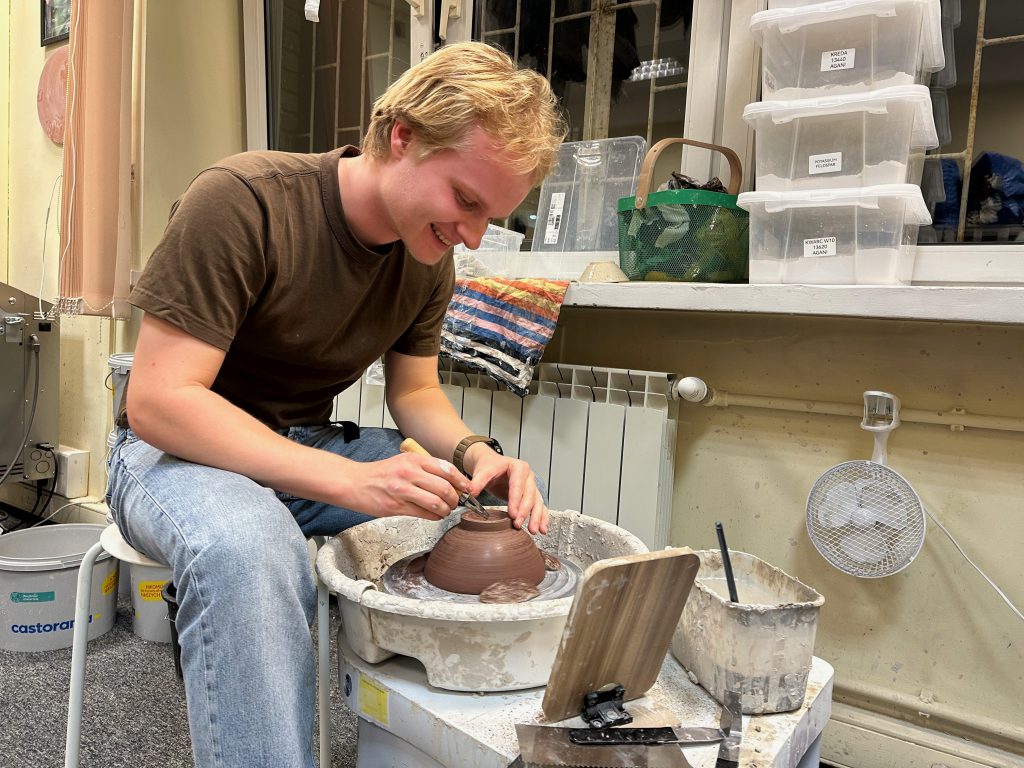
Handmake a unique ceramic item out of fresh stoneware clay.
Get a tutorial on the basics, then make whatever you wish. No limits on clay/items.
Glazing
PLN 200
3 Hours
Create unique surface decoration using a rich set of ceramic glazes
Customize your items with colors, patterns, illustrations, and leave it with us for a final firing.
NEW · OPEN VOUCHER
Every class, for a whole month
One voucher, 30 days, up to 9 class places: enough to come to every Wednesday and Saturday session. Come on your own every time, or bring friends along.

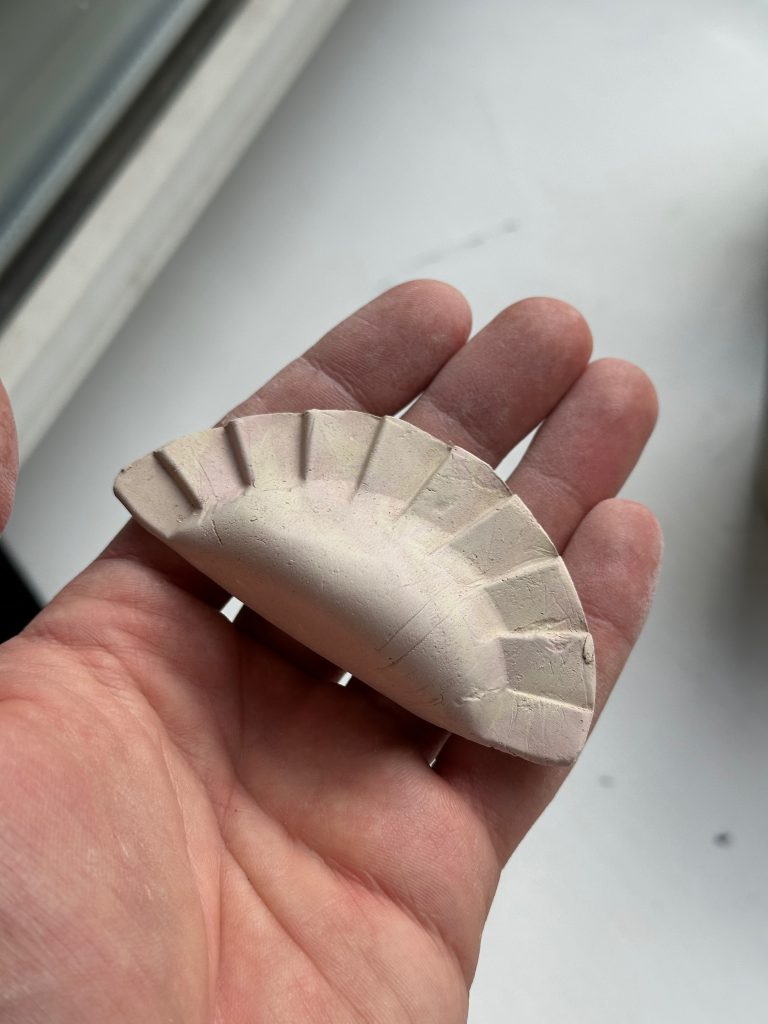
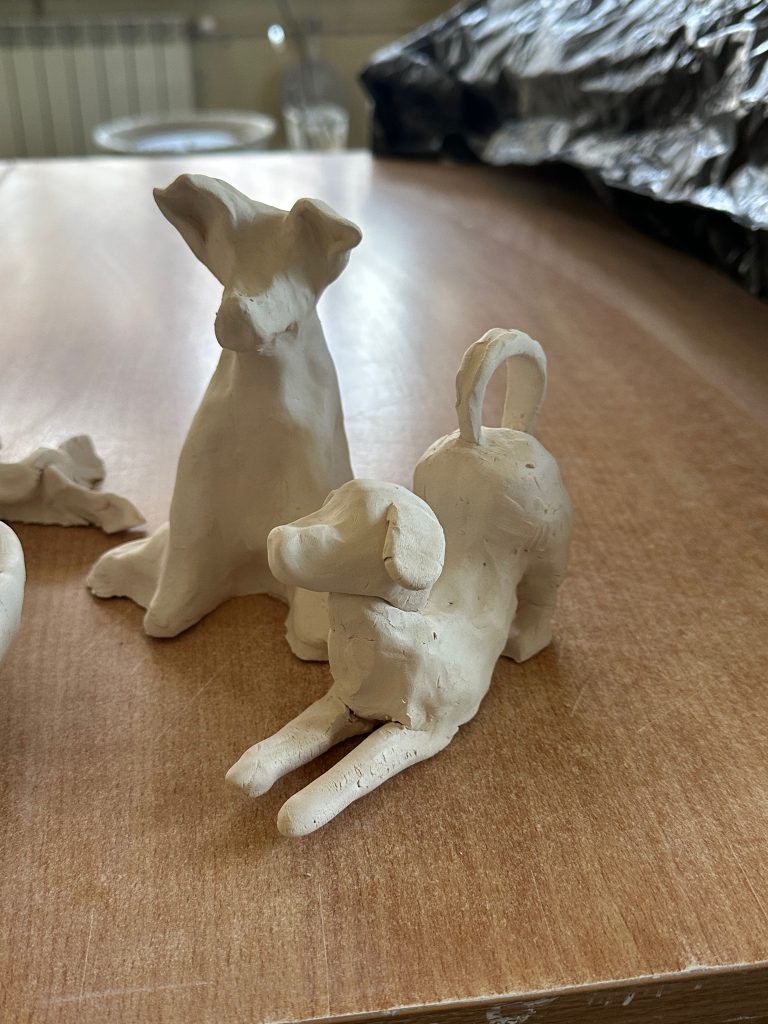
Coffee tastes different from a cup you made yourself.
Handmade pots are a universal gift. Potters are always ready for a last-minute birthday.
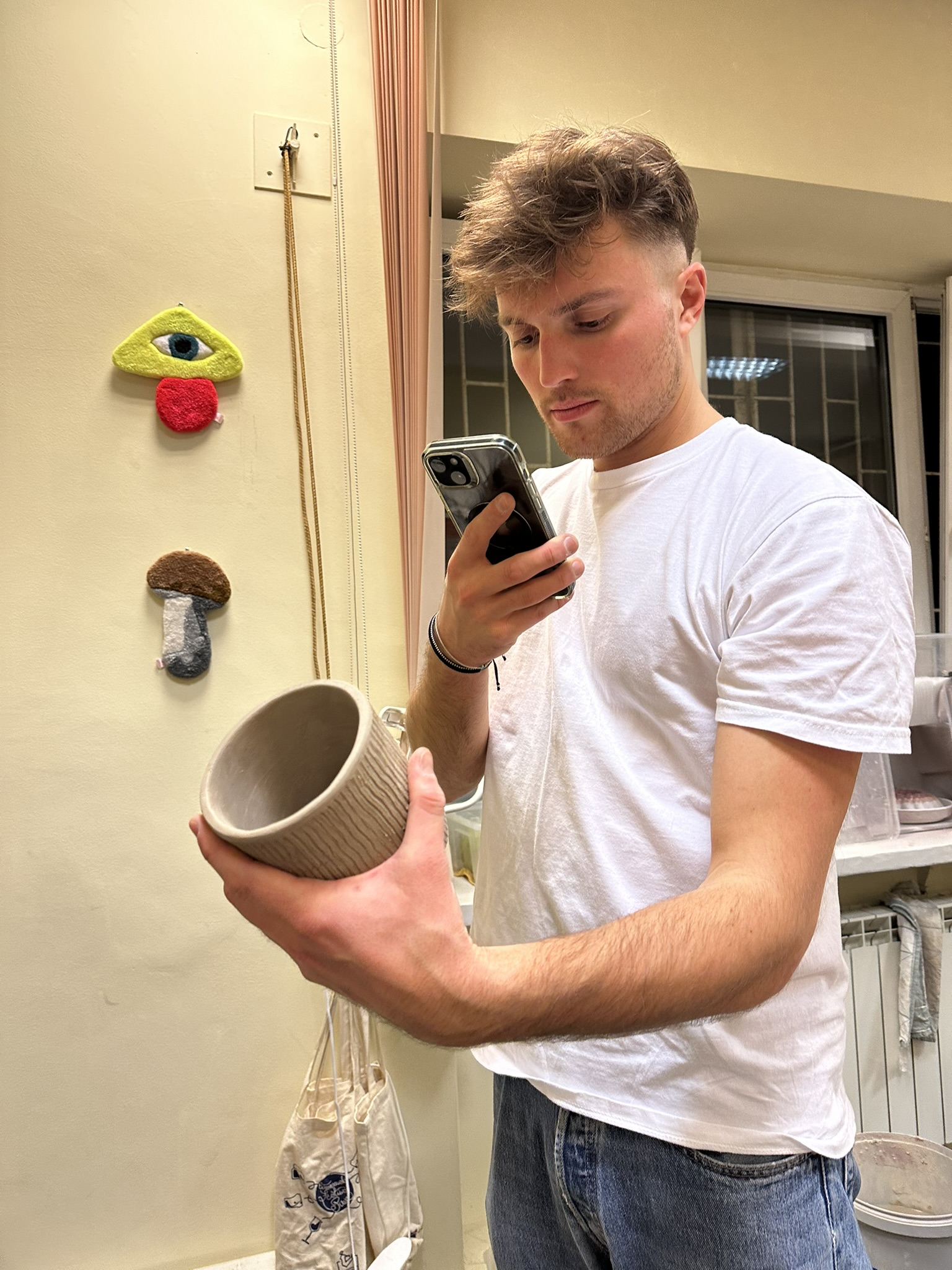
Any shape you want it
Working together gives us a glimpse into each other’s creativity.
This can affect the way we interact.
Group Classes
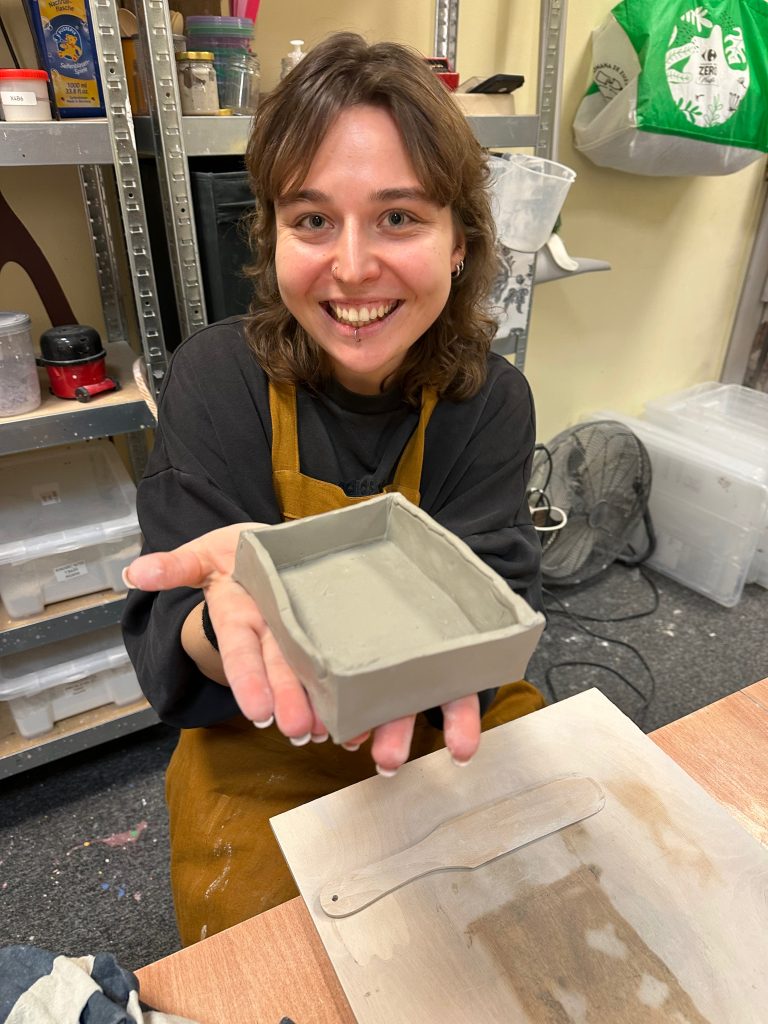
- Bring your friends or family along for a cozy new activity.
- Put together a group of coworkers for some innovative team building.
- We will give you a discount if you book multiple class slots at once.
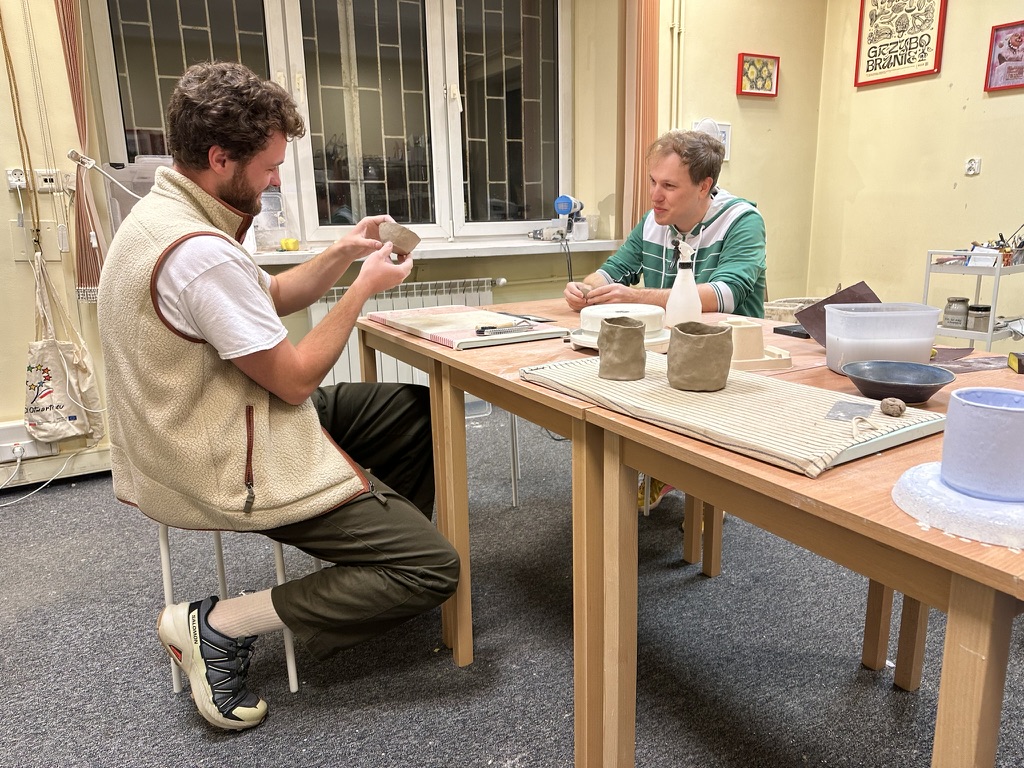
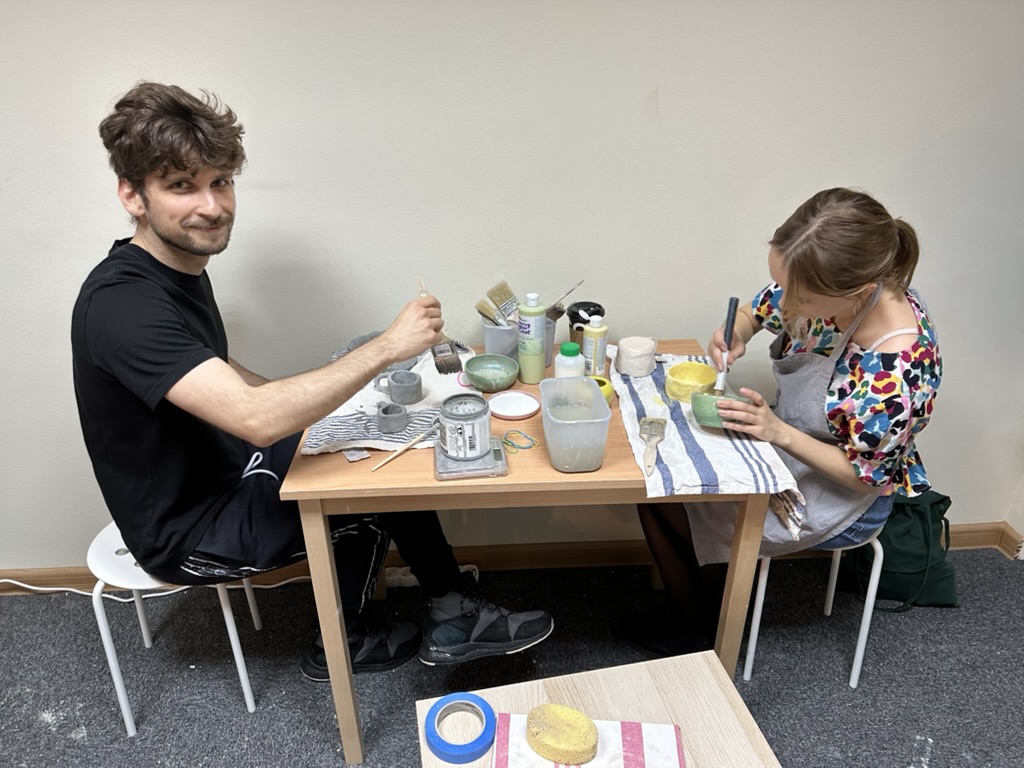
Custom Sessions
- Have a clay date with a special someone. We will give you brief instructions and leave so you can enjoy each other.
- Order a class to go. We can bring a workshop to your home or office.
- Already got some experience? Book us just for space, materials, and tools – without any teaching.
- To organize a Custom Session, please reach out via message.
Where does pottery come from?
There are as many methods as there are makers.
But much of the ceramic process has been constant for thousands of years.
1. Shaping
You take a block of soft clay and form it into a shape, like a bowl, mug, or sculpture. Most new potters simply use their hands, while many others shape on the wheel, or using forms.
2. Drying
After being exposed to air for a while, soft clay dries. There are two stages to drying: ‘leather hard’ and ‘bone dry’. Leather-hard pottery can be trimmed to improve its shape.
3. First Firing – The Bisque
Once dry, your clay work goes into a kiln, and we fire it to 900C/1650F in a ‘bisque’ – the first of two firings. As bisqueware, your pottery is primed for glazing and decoration.
4. Glazing
It’s time to decorate your piece by applying a few layers of glaze with a brush. You can also use underglazes, which are more similar to paint, to create precise, elaborate designs on your pots.
5. Second Firing – The High Fire
Once your glazes are dry, it’s time to return to the kiln for a final High Fire firing. We turn up the heat – for this one we need as much as 1200C/2200F. The glaze melts and takes on its final look.
6. Ready for Pick Up
Your item is now ready. Pick it up and take it where it belongs. Perhaps it will decorate your home, or hold your morning tea. Or, better yet, you could use it as a delightful handmade gift for someone you like.
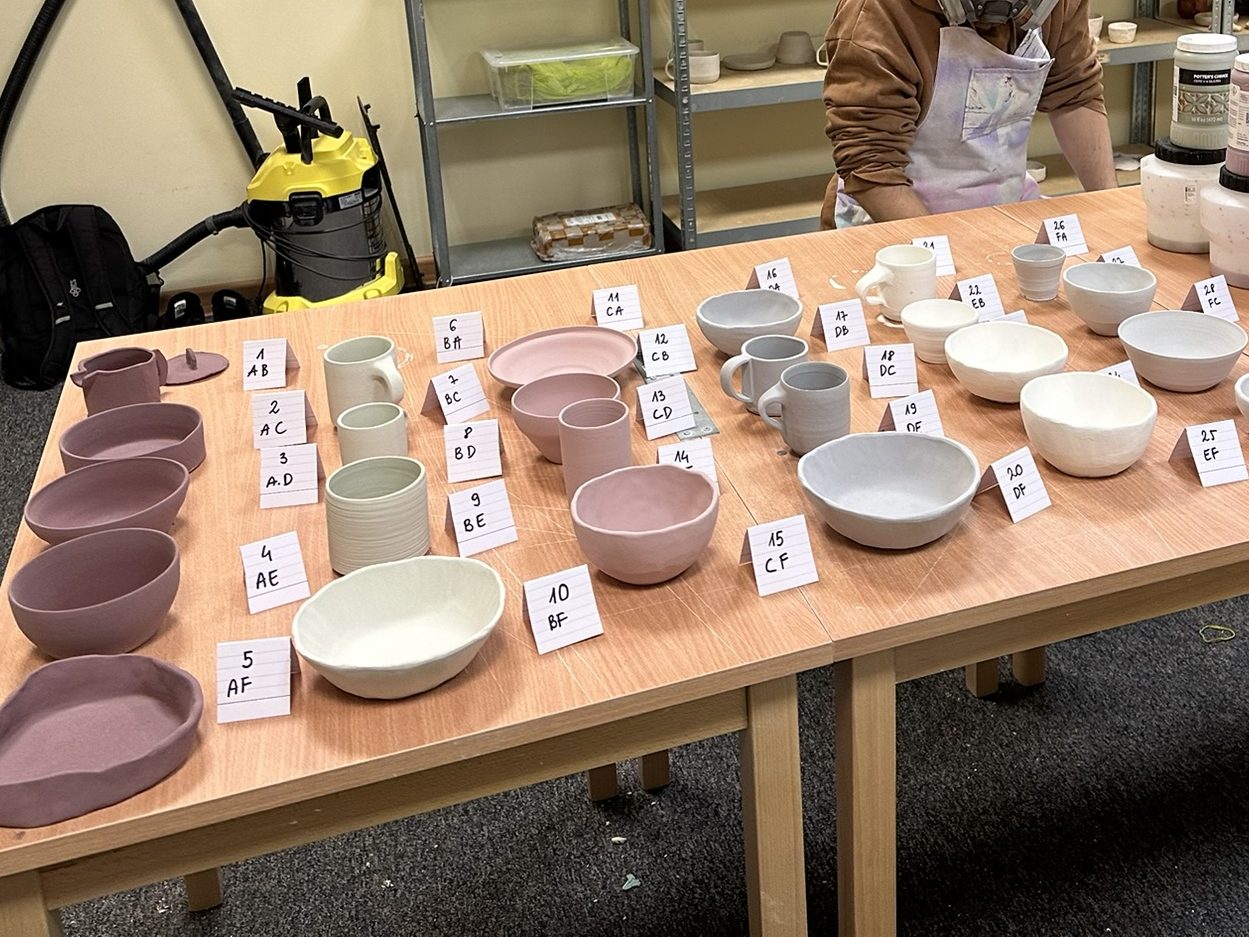
We’re passionate about research
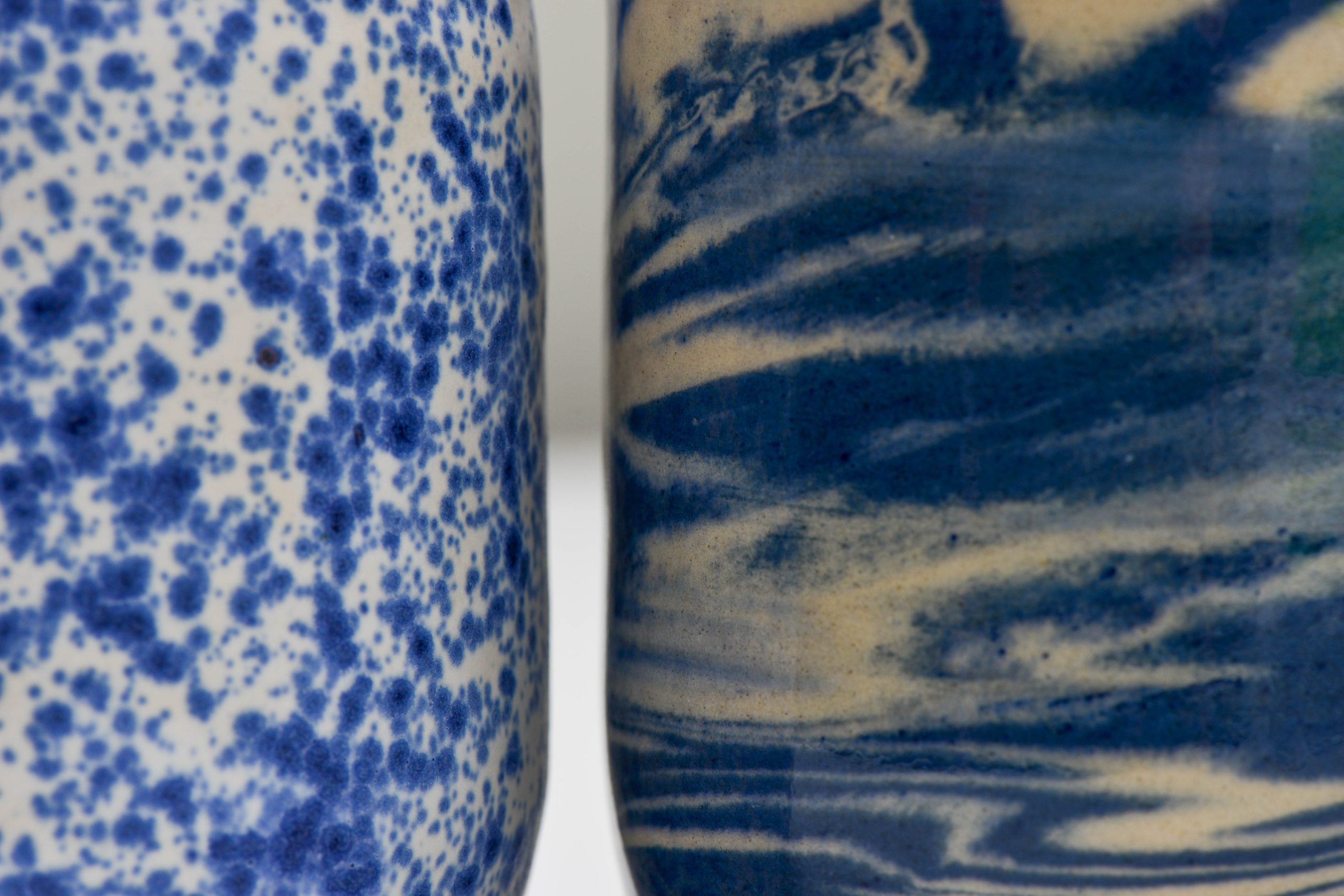
A lot of our energy goes into experimental glaze work. We explore interactions between different glazes, hoping to find combinations never seen before.
We reserve our favorite recipes for our class participants, and publish the rest for other potters to try.